
Subaru Outback (BR): Rear center seating position
CAUTION
The head restraint is not intended to be used at the lowest position. Before sitting on the seat, raise the head restraint to the extended position.
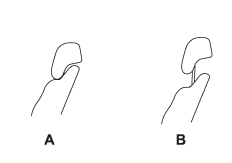
A) When not used (retracted position) B) When used (extended position)
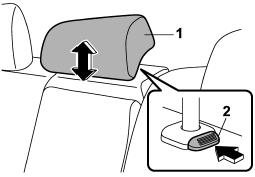
1) Head restraint
2) Release button
To raise: Pull the head restraint up.
To lower: Push the head restraint down while pressing the release button on the top of the seatback.
To remove: While pressing the release button, pull out the head restraint.
To install: Install the head restraint into the holes that are located on the top of the seatback until the head restraint locks.
When the rear-center seating position is occupied, raise the head restraint to the extended position. When the rear center seating position is not occupied, lower the head restraint to improve rearward visibility.
READ NEXT:
 Armrest
To lower the armrest, pull on the top edge of the armrest.
WARNING
To avoid the possibility of serious injury, passengers must never be allowed
to sit on the center armrest while the vehicle is
SEE MORE:
A/C – Air conditioner button
If the windshield starts to fog when the climate control system is operated in
the AUTO mode, press the air conditioner button “A/C” to defog and dehumidify. When
this button is pressed, the air conditioner compressor turns on and the indicator
light “A/C” on the display illuminates.
CVTF Cooler Pipe and Hose
A: REMOVAL
CAUTION:
Immediately after the vehicle has been running or after idling for a
long time, the CVTF will be hot.
Be careful not to burn yourself.
If the CVTF is spilt over exhaust pipe, wipe it off with cloth to
avoid emitting smoke or causing a
fire.
When removing the CVTF cooler
