
Subaru Outback (BR): Checking the fluid level in MT models
WARNING
Never let clutch fluid contact your eyes because clutch fluid can be harmful to your eyes. If clutch fluid gets in your eyes, immediately flush them thoroughly with clean water. For safety, when performing this work, wearing eye protection is advisable.
CAUTION
● Clutch fluid absorbs moisture from the air. Any absorbed moisture can cause improper clutch operation.
● If the vehicle requires frequent refilling, there may be a leak. If you suspect a problem, have the vehicle checked at your SUBARU dealer.
● When clutch fluid is added, be careful not to allow any dirt into the tank.
● Never splash the clutch fluid over painted surfaces or rubber parts. Alcohol contained in the clutch fluid may damage them.
● Be careful not to spill clutch fluid when adding it. If clutch fluid touches the exhaust pipe, it may cause a bad smell, smoke, and/or a fire. If clutch fluid gets on the exhaust pipe, be sure to wipe it off.
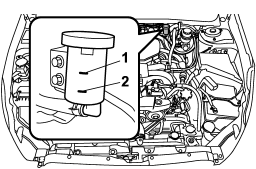
1) “MAX” level mark
2) “MIN” level mark
Check the fluid level on the outside of the reservoir. If the level is below “MIN” level mark, add the recommended clutch fluid to “MAX” level mark.
Use only clutch fluid from a sealed container.
READ NEXT:
 Recommended clutch fluid
CAUTION
Never use different brands of clutch fluid together. Also, avoid mixing DOT 3
and DOT 4 brake fluids even if they are the same brand.
Brake pedal
Check the brake pedal free play and reserve distance according to the maintenance
schedule in the “Warranty and Maintenance Booklet”.
SEE MORE:
Tilt/telescopic steering wheel
WARNING
Do not adjust the steering wheel tilt/ telescopic position while driving. This
may cause loss of vehicle control and result in personal injury.
1. Adjust the seat position. Refer to “Front seats” F1-2.
2. Pull the tilt/telescopic lock lever down.
3. Move the steering wheel to the
Operating the driver’s window
1) Automatically open/close
2) Open/close
To open:
Press the switch down lightly and hold it. The window will open as long as the
switch is held.
This switch also has a one-touch auto down function that allows the window to
be opened fully without holding the switch. Press the switch down
