
Subaru Outback (BR): Choosing a child restraint system
Subaru Outback (BR) 2010-2015 Owners Manual / Seat, seatbelt and SRS airbags / Child restraint systems / Choosing a child restraint system
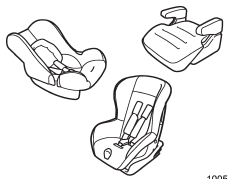
Choose a child restraint system that is appropriate for the child’s age and size (weight and height) in order to provide the child with proper protection. The child restraint system should meet all applicable requirements of Federal Motor Vehicle Safety Standards for United States or Canada Motor Vehicle Safety Standards for Canada. It can be identified by looking for the label on the child restraint system or the manufacture’s statement of compliance in the document attached to the system. Also it is important for you to make sure that the child restraint system is compatible with the vehicle in which it will be used.
READ NEXT:
 Installing child restraint systems with A/ELR seatbelt
WARNING
● Child restraint systems and seatbelts can become hot in a vehicle that has
been closed up in sunny weather; they could burn a small child. Check the child
restraint system before
Installing a rearward facing child restraint
1. Place the child restraint system in the rear seating position.
2. Run the lap and shoulder belt through or around the child restraint system
following the instructions provided by its manufact
Installing forward facing child restraint
1. Place the child restraint system in the rear seating position.
2. Run the lap and shoulder belt through or around the child restraint system
following the instructions provided by its manufact
SEE MORE:
Coat hook
WARNING
Do not hang coat hangers or other hard or pointed objects on the coat hooks.
If such items were hanging on the coat hooks during deployment of the SRS curtain
airbags, they could cause serious injuries by coming off the coat hooks and being
thrown through the cabin or by preventing
If the Low fuel warning light lights up
The fuel tank's low fuel warning light activates when it's nearly empty and only functions with the ignition switch in the "ON" position. When this light comes on, it's crucial to refill the fuel tank promptly.
Please be cautious and refill the tank as soon as the low fuel warning light a
© 2010-2026 Copyright www.suoutback.com
